In May 2026, the automatic transmission of fire alarms to Estonia's Emergency Response Centre changed for many buildings. Several months have now passed, but the matter is still relevant for building owners and property managers. Now is a good time to check where your building's fire alarm signals actually go, who responds to them and whether the agreed response procedures work in practice.
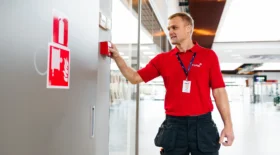
Since 1 May 2026, fire alarms from buildings equipped with an automatic fire alarm system (ATS) are no longer automatically transmitted to the Emergency Response Centre in every case. The change was introduced to reduce the burden on the Estonian Rescue Board caused by false callouts, which have been particularly common with automatic fire alarm notifications.
With the new arrangements now in place, it is worth taking the next step and asking whether the building has a clear procedure for what happens when the fire alarm system is activated.
According to Ahti Kuusk, Head of Safety Services at Forus, the most important question is not simply whether a building has a compliant fire alarm system. It is equally important to know where the alarm signal is sent and who is responsible for responding to it.
Do you know where your building’s fire alarm signals go?
Following the changes, mandatory connection to the Emergency Response Centre applies to specific categories of buildings and facilities.
These include establishments presenting a major accident hazard or classified as hazardous, subject to the applicable floor-area requirements, including the 4,000 m² threshold, as well as healthcare and care institutions with more than 50 occupants.
Certain other types of premises may also apply for a connection to the Emergency Response Centre. These include:
-
Healthcare and care institutions with up to 50 occupants
-
Accommodation facilities without permanent on-site staff
-
Buildings essential for the provision of vital services
-
Archives and museums
-
Other buildings of significant national importance
Establishments presenting a major accident hazard or classified as hazardous may also apply if their hazard zone includes a residential area.
However, if a building does not fall into these categories, that does not mean its fire alarms can be ignored. One option is to forward alarm signals to a security company’s control centre and agree in advance on the procedures to follow when an alarm is triggered.
It is important to remember that forwarding alarms to the Forus control centre does not replace the obligation to maintain a connection to the Emergency Response Centre for buildings where this is required by law. In such cases, the control centre service can provide an additional layer of support.
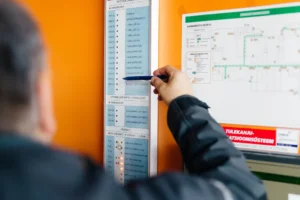
A fire alarm system alone is not enough
Building owners and property managers should therefore review the entire alarm response process:
-
Who receives the alarm first?
-
Who checks whether it could be a real fire or a false alarm?
-
Who needs to be notified?
-
Is someone available on site to assess the situation quickly, or does a patrol need to be dispatched?
-
Can the patrol gain quick access to the premises?
-
Are video surveillance systems available that could help assess the situation remotely to some extent?
-
Who contacts the Emergency Response Centre if there is an actual fire?
These questions need clear answers before an alarm occurs.
Back in December, Kuusk pointed out that fire safety arrangements sometimes place too much emphasis on equipment and documentation, even though procedures must also be clear to the people expected to follow them in an emergency.
“A complicated set of instructions or a detailed diagram is of little use if an employee does not know what to do first in an emergency,” he said.
Anyone who discovers a fire is still required to report it immediately by calling 112 and, where necessary, initiate an evacuation. Employee instructions and training must therefore reflect the building’s actual operating procedures.
Has the documentation actually been updated?
The changes were not limited to the technical transmission of alarm signals.
Buildings where automatic fire alarm transmission to the Emergency Response Centre was discontinued also needed to review and, where necessary, update their fire safety documentation. This could include the fire emergency action plan, emergency response information card and documents relating to the fire alarm system.
The deadline for reviewing these documents was 1 July 2026.
If this was overlooked during the summer, now is the time to check whether the documentation reflects how the building actually operates.
For example, a fire emergency action plan should no longer assume that the Emergency Response Centre will be notified automatically if the building no longer has that connection. Employees must also understand how their own roles and responsibilities have changed.
Is transmitting an alarm signal enough?
When fire alarm signals are forwarded to the Forus control centre, the response can be organised according to the needs of the individual site and the procedures agreed with the client.
One option is remote management of the fire alarm system, allowing control centre operators to identify more precisely which area or detector has triggered an alarm.
This helps them assess the situation more quickly and involve the site’s designated contact person or a patrol if necessary. Forus already uses such solutions at several client sites.
Where additional video surveillance is available, camera footage may also help assess the situation remotely in certain circumstances.
The aim is not to replace the role of on-site personnel or emergency responders, but to establish as quickly as possible what is happening and what kind of response is needed.
Maintenance is easily overlooked
Alongside response procedures, it is important to review the condition of the technical systems themselves.
Fire alarm signals are transmitted using dedicated alarm transmission equipment. The connection must be monitored, and the equipment requires regular maintenance.
However, maintaining the alarm transmission equipment does not replace the scheduled inspection and maintenance of the fire alarm system itself.
In other words, it is not enough that a system was installed years ago and has not caused any problems since. Fire safety systems must be fully operational on the day they are actually needed.
Five questions every building owner or property manager should ask
There are at least five things worth checking:
-
Is my building required to be connected to the Emergency Response Centre, or is it eligible to apply for a connection?
-
If fire alarm signals are no longer sent automatically to the Emergency Response Centre, where are they sent instead?
-
Who checks the situation when an alarm occurs, and who decides what action to take?
-
Do the fire safety documents and employee instructions reflect the current operating procedures?
-
Have the fire alarm system and alarm transmission equipment been inspected and maintained in accordance with the requirements?
Above all, it is important to avoid a situation where a fire alarm goes off and only then does everyone start trying to establish who is supposed to respond.
If you are unsure which requirements apply to your building or how fire alarm transmission and response procedures should be organised, Forus specialists can review your existing arrangements and help you choose a suitable alarm transmission and response solution for your property.