

Sander Koppel, Service Manager for Forus’ Southern Region, believes that good leadership begins with a simple principle: treat people the way you would want to be treated. This mindset has helped him build strong teams, keep employees motivated, and navigate even the most unexpected situations. This year, it also earned him the company’s Manager of the Year award.
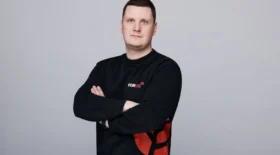
Sander Koppel entered the security services field already during his university years, when he began working as part of nightclub security teams. Later, he moved on to patrol work, and over the years, security has become a natural part of his everyday life. “Security work has been part of my life since I was 18,” he says.
Today, Koppel works as the Service Manager for Forus’ Southern Region. His responsibilities include people, various sites, and situations requiring rapid response. According to him, no two days in this role are the same, because the job involves a bit of everything. “There is no single fixed task. The most important thing is that the people working under me are satisfied and that the company’s goals are achieved,” he says.
In addition to day-to-day work, his responsibilities include various projects, unexpected situations, and challenges that require quick action. It is this variety that keeps the job interesting for him. “It’s never boring,” he notes with a smile.
A large service area covering all of Southern Estonia means constant movement, a wide range of sites, and very different people. Koppel admits that traditional office work would not suit him. “I probably couldn’t sit in an office from nine to five,” he says. “Projects and variety in everyday work are probably what I enjoy the most.”
A Good Leader Cares About Their People
According to Koppel, one of the biggest challenges in the security services sector is finding and retaining good people, especially in smaller regions. “You have to treat people exactly the way you want to be treated yourself,” he says.
In his view, a strong team is built on trust, mutual support, and the feeling that people are cared for. “If things are good for them and you meet them halfway, then the next time you need help, they will help you too,” the manager knows from experience.
Koppel believes it is important that people feel seen and supported. For him, leadership is not only about organising work, but also about ensuring that the team knows their manager is there for them in difficult situations as well.
One particularly memorable example for him was the Nordic Combined World Cup stage held in Otepää, where the entire team received excellent feedback from the client. “The client appreciated that people were genuinely doing their jobs,” he says. “They checked permits, stopped cars, and, when necessary, asked even so-called important guests for their documents. They remained present throughout the long event, even though the weather was cold and the conditions were difficult.”
According to Koppel, this kind of attitude does not happen on its own. “You can’t simply tell people to endure it and stand out there freezing,” he believes. “You have to be there yourself as well — invite them into the car to warm up from time to time, offer them tea, and show that you care.”
For him, the most important qualities in a strong team are reliability and keeping one’s word. “If something is promised, it has to be done.”
In Difficult Situations, Quick Response Matters
According to Koppel, a manager’s work often means responding quickly to unexpected situations. Recently, for example, he had to arrange emergency manned guarding for a client at very short notice outside regular working hours. Although the situation arose on a Friday evening and a solution was needed quickly, Koppel was able to find the necessary people in a short time and provide the client with a solution.
In his view, in such situations, you cannot simply say that the working day is over. “It doesn’t matter what time it is or what day it is — if something needs to be done, then it needs to be done,” Koppel says.
Over the years, he has also learned to remain calm in difficult situations. “At first, there used to be immediate panic — that now you have to start acting right away. In reality, nothing happens if you take a moment, think through the options, and then start solving the problem,” the manager explains.
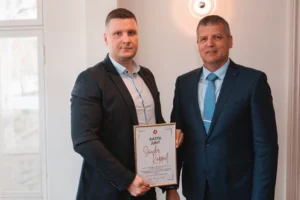
Recognition That Came as a Pleasant Surprise
Forus’ Manager of the Year award came as something of a surprise to Koppel. “It was definitely a very pleasant recognition. I have been doing this work for a long time, and it felt good to know that my contribution is being noticed,” he comments.
Koppel also considers recognising others to be very important. In his view, recognition is not only about financial value — sincere feedback can often have a major impact on a person’s motivation. “If a client says that the work was done very well, it is definitely worth passing that on to the employees. It helps maintain motivation,” he says.
In his free time, sport helps Koppel maintain balance alongside work and a fast-paced schedule. He goes to the gym regularly and has practised boxing for years. He also actively follows his son’s football training sessions and competitions, which give him an opportunity to switch off from work and spend time with his family.
For those who want to become managers in the future, Koppel offers a simple but, in his view, very important piece of advice: “Everything should be approached with common sense, and you shouldn’t overthink things. Very often, a simpler solution can be found much faster than it first seems.”
The article was originally published in Personaliuudised.