

Having video surveillance does not automatically mean that the system helps a company prevent real risks or provides the necessary information when it is actually needed. Cameras may be recording, but if the architecture is wrong, maintenance is insufficient or data management has not been properly thought through, the value of the solution may be significantly lower than expected.
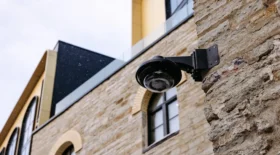
According to Guido Ulejev, Security Solutions Portfolio Manager at Forus, companies often focus on the number of cameras, image quality and purchase price when choosing video surveillance solutions. However, the actual performance of the system is determined by much broader questions. “The question is not simply whether to choose a cloud-based or local solution, but which architecture best supports the risks, capabilities and core business of a specific company,” says Ulejev.
In recent years, companies have shown growing interest in cloud-based video systems. Cloud solutions are already common in day-to-day core and support business functions, while security systems still often rely on local, site-based solutions.
Both models have their advantages and risks. In many cases, the best result comes from a hybrid solution, where the first layer of data filtering takes place in the camera or on site, while more resource-intensive analytics are handled centrally. “Based on research and practical experience, the best result comes from a hybrid solution: the first filtering happens in or near the camera, resource-intensive analytics are carried out centrally, and nothing unnecessary is transmitted across the network in between,” explains Ulejev.

The necessary recording cannot be found or used quickly
One of the central purposes of video surveillance is to provide a clear overview of what happened after an incident. In practice, however, finding the right recording may take a long time, or it may turn out that the required area was not sufficiently covered. The issue may lie in the camera angle, image quality, recording settings or how easily footage from different cameras can be searched and compared.
According to Ulejev, there is still a common belief that a wide-angle camera image and recording only on motion are sufficient for effective video surveillance. “In video surveillance planning, there is a growing understanding that some of the most important elements behind the actual success and value of a system are its architecture, privacy protection and video analytics,” he notes.
If a person, vehicle or course of events cannot be identified accurately enough from the recording, the system does not fulfil its purpose, even if the recording technically exists.
No one knows exactly whether all cameras are working
A video surveillance system may appear to function for years even though some cameras are pointing in the wrong direction, the image is blurry or recording has stopped due to a fault. Problems often emerge only when footage is needed. For this reason, system maintenance should not be limited to fixing faults — it should also include regular performance checks.
It is worth checking whether all cameras are transmitting an image, whether recordings are stored for the required period, whether device software is up to date and whether system error messages reach the right people. It is also important to assess whether cameras installed years ago still match the company’s current way of working. The use of premises, movement routes, entrances and company risks can change considerably over time.
The use of premises, movement routes, entrances and company risks can change considerably over time.
According to Ulejev, the impact of outdated or poorly designed systems often extends beyond the security function. “This is primarily a problem for those responsible for security, but in reality the impact reaches the company’s management level, where issues related to security systems and their resolution usually escalate,” he says.
An internet or equipment failure leaves the site blind
With a purely cloud-based solution, the usefulness of the system depends on an external network connection. If the connection is interrupted and there is no local buffering on site, recording or access to the camera image may be disrupted. “If the external network connection is interrupted, a purely cloud-based site becomes blind. That is why sufficient local buffering must be ensured, whether through separate hardware or memory cards used in the cameras,” explains Ulejev.
In a local system, one of the main risks is the on-site recording device. If the local video recorder is stolen, damaged in a fire or its hard drive fails, the necessary evidence may disappear along with the device. “The cloud makes it possible to preserve recordings even if the site or local device is physically damaged. With local recording, the on-site video recorder is the biggest possible point of failure — theft, fire or disk failure can destroy the evidence,” says Ulejev.
That is why system planning must include what happens in the event of an internet outage, power failure, disk failure or physical damage. If necessary, recording can be duplicated or a hybrid solution can be used, where some data is stored on site and some in a secure external environment.
There is no clear overview of who has access to the videos
Video surveillance involves the processing of personal data, and the company remains responsible for it regardless of whether the recordings are stored on a local device or in the environment of a cloud service provider. A company must have a clear overview of who may view the camera image or recordings, in which cases this is done and whether access is logged.
Attention should also be paid to data retention periods, camera fields of view, informing people and whether only the information necessary for achieving the purpose is being recorded. “Responsibility does not transfer to the cloud service provider. GDPR rules cannot be avoided when it comes to video surveillance. The company remains the data controller regardless of where the processing takes place,” Ulejev emphasises.
GDPR rules cannot be avoided when it comes to video surveillance.
In his view, data protection should not be treated as a limitation that prevents video surveillance from functioning. “GDPR is often seen as a restriction, but it is rather a factor that shapes the architecture of an effective video system. Compliance and the resulting well-considered use of data also help reduce bandwidth and storage costs,” says Ulejev.
Privacy protection and resource efficiency are therefore not opposites. If data is minimised, encrypted and masked already in the camera or local device, the need for network and storage resources also decreases.
System costs are assessed only by purchase price
When choosing a video surveillance solution, companies often compare the initial cost of cameras, recording devices and installation. In reality, the total lifecycle cost of the system should be taken into account.
With a local solution, additional costs include hardware maintenance, software updates, device replacement, growing data volumes and maintaining in-house technical competence.
With a cloud solution, companies must consider licences, monthly fees, data volume, network load and possible vendor lock-in. “The monthly fee of a cloud solution is more predictable and reduces the company’s need to manage hardware itself. This leaves IT specialists more time to focus on core business,” explains Ulejev.
According to him, the costs of cloud and local solutions can only be compared fairly when all expenses related to owning the system are taken into account. “The monthly cloud fee may seem higher at first glance, but the comparison is only fair once the full lifecycle cost of the local system has been calculated as well,” he says.
Before choosing a service, it is also worth considering how easy it would be to change the service provider in the future and under what conditions the company can retrieve its recordings and other data. “Data availability, formats and contract terms determine how expensive it will be to leave,” notes Ulejev.
There is no single right solution
A cloud solution is often well suited to companies with many smaller locations and limited in-house IT or security technology competence. Centralised management makes it easier to monitor, update and manage cameras located at different sites.
For a large production complex, a very extensive camera network or a company with strict data location requirements, a local or hybrid solution may be justified. “Organisations with many small locations and limited support staff benefit from a cloud solution. For large companies with a single production complex, IT capability, strict data residency requirements or a very large camera network, a local or hybrid core is justified,” Ulejev explains.
When choosing the architecture, it is important to assess not only the technology, but also the company’s readiness to manage the system, detect failures, organise access rights and quickly find recordings when needed.
According to Ulejev, security systems are no longer separate from a company’s core business. “They are one of the functions that help ensure both the protection of assets and the smooth flow of core operations,” he says.
A video surveillance review helps identify hidden risks
When reviewing an existing video surveillance system, it is worth assessing not only camera placement, image quality and the usability of recordings, but also the system architecture, reliability, cybersecurity and data protection.
Forus specialists help map the strengths of the existing solution, possible points of failure and development needs. During the review, it is possible to assess whether the current system corresponds to the company’s actual risks and whether a local, cloud-based or hybrid solution would be the most suitable.
The goal is not necessarily to replace the entire existing system. Often, the effectiveness of video surveillance can be improved by relocating cameras, changing settings, improving the recording logic or introducing more centralised management.
Does your company’s video surveillance work when it is actually needed? Contact Forus and let’s review the existing solution together.