Are the smoke and carbon monoxide alarms in your home working properly and installed in the right places? This is particularly important during the heating season, as even a new, modern alarm may fail to warn you in time if it is incorrectly positioned. Ahti Kuusk, Head of Safety Services at Forus, explains how to check your alarms, when to replace them and where to install a carbon monoxide alarm.
Between 9 and 13 November, the Estonian Rescue Board inspected homes across Estonia to check whether smoke and carbon monoxide alarms were installed and functioning properly. Although these inspections have now ended, that does not mean homeowners can forget about checking their alarms. If the rescue services did not visit your home, it is worth carrying out the necessary checks yourself. This is not simply about complying with regulations, but about protecting yourself and your family.
Smoke alarms have been mandatory in Estonian homes since 2009. This means that if you are still using an alarm installed back then, its normal service life has long since expired. People may also be unsure when an alarm needs replacing or how to check whether it is working correctly.
According to Ahti Kuusk, simply having an alarm installed does not automatically mean that a home is adequately protected against fire or carbon monoxide poisoning.
“An alarm can remain on the ceiling for years and appear to be in perfect condition. However, if its service life has expired or it has been installed incorrectly, it may not work as intended in an emergency. That’s why it’s important to check not only whether the alarm makes a sound, but also when it was installed and whether it is in the right location,” Kuusk explains.

How can you check whether your smoke alarm is working?
Smoke alarms should be tested at least once a month or according to the manufacturer’s instructions. To do this, press the test button on the device. A functioning alarm should emit a loud warning signal.
Pressing the test button checks the operation of the alarm’s electronics and audible warning signal. However, it does not confirm that the alarm can detect smoke as effectively as it did when new. Therefore, in addition to regular testing, it is important to monitor the device’s service life and overall condition.
If your smoke alarm does not make a sound when you press the test button, check its battery and follow the manufacturer’s instructions. If the problem persists, replace the alarm.
Occasional short beeps should not be ignored either. They may indicate a low battery, a malfunction or the end of the device’s service life.
“Sometimes people simply silence a beeping alarm or remove its battery because the sound is annoying. In reality, the device is telling you that something needs attention. If the alarm is not working, your home loses an essential early warning system,” Kuusk emphasises.
Smoke alarms should also be cleaned regularly to remove dust. This can be done using a soft brush or vacuum cleaner, following the manufacturer’s instructions. Dust and dirt can interfere with the device’s operation.
When should you replace your smoke alarm?
Smoke alarms generally have a service life of up to ten years, although the exact period depends on the manufacturer and model. The device must be replaced no later than the end of its manufacturer-specified service life, even if the test button still works.
You can check the age of your smoke alarm on the back of the device or in its user manual. Some models display the manufacturing date, while others indicate the recommended replacement date.
According to Kuusk, older alarms can create a false sense of security.
“If the alarm makes a sound when you press the test button, people often assume everything is fine. However, the device’s components also deteriorate over time. Once the manufacturer’s specified service life has expired, you shouldn’t wait until the alarm stops working altogether,” he explains.
Where should a smoke alarm be installed, and how many do you need?
Every home must have at least one functioning smoke alarm. In larger or multi-storey homes, it is recommended to install an alarm on every floor and, where possible, in bedrooms as well.
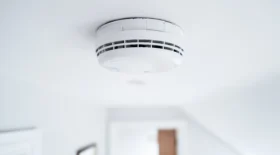
Smoke alarms are generally installed on the ceiling, preferably near the centre of the room. The reason is simple: smoke rises during a fire, allowing a ceiling-mounted alarm to provide an early warning.
The alarm should not be installed directly next to a ventilation opening or light fixture. Standard smoke alarms are also not recommended for kitchens or bathrooms, where steam from cooking or washing can cause false alarms.
More detailed guidance on alarm placement and maintenance is available in the Estonian Rescue Board’s smoke alarm instructions.
It is important to ensure that the alarm can also be heard in bedrooms. Fires at night are particularly dangerous because sleeping occupants may not notice smoke or the early stages of a fire.
At what height and where should a carbon monoxide alarm be installed?
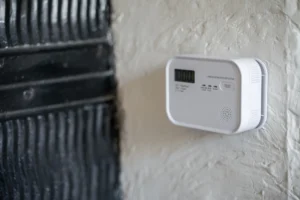
The correct installation height for a carbon monoxide alarm depends on the manufacturer’s instructions and whether the room contains a heating appliance. Unlike smoke alarms, carbon monoxide alarms should not automatically be assumed to belong on the ceiling.
According to Kuusk, this is one of the most important details homeowners should pay attention to.
“You can buy an excellent, modern carbon monoxide alarm, but if you install it in the wrong place, it may not detect danger in time. For example, an alarm installed high on the ceiling may not be suitable for a room where the manufacturer specifies installation at breathing height,” Kuusk explains.
In rooms without a heating appliance, it is generally recommended to install a carbon monoxide alarm at breathing height. In a living room, for example, this could be approximately at the face level of a person sitting on the sofa. In a bedroom, it should be at the breathing height of someone lying in bed.
The requirements may differ in rooms containing a heating appliance. Depending on the manufacturer’s instructions, the ceiling may also be a suitable location. In such cases, the distance from the heating appliance and walls must also be considered.
The alarm should not be placed where airflow is obstructed or where ventilation could affect the movement of carbon monoxide towards the device.
“The simplest thing to do is to take out your carbon monoxide alarm’s user manual and check whether it is installed at the correct height and in a suitable location. If you’ve lost the manual, you can usually find it online using the device’s model number. You shouldn’t choose the location simply based on where the alarm will be least noticeable,” Kuusk recommends.
When is a carbon monoxide alarm mandatory at home?
In Estonia, carbon monoxide alarms are mandatory in buildings that use solid-fuel heating appliances, such as wood-burning stoves, fireplaces, cooking stoves or boilers, and in residential premises containing a gas appliance connected to a chimney. Certain exceptions specified in legislation also apply to gas appliances.
Carbon monoxide (CO) is a poisonous gas that has no colour, smell or taste. It is produced during incomplete combustion, which can occur due to insufficient ventilation, a faulty heating appliance or closing a stove’s chimney damper too early.
Early symptoms of carbon monoxide poisoning may include headaches, dizziness, weakness and nausea. Because people cannot detect carbon monoxide through their senses, the danger may go unnoticed.
It is important to understand that a standard smoke alarm does not detect carbon monoxide. Smoke alarms respond to smoke particles, while carbon monoxide alarms detect carbon monoxide in the air.
Combined devices that perform both functions are also available, but they must meet the requirements applicable to both types of alarms.
How should you test a carbon monoxide alarm, and when should it be replaced?
Carbon monoxide alarms also need to be tested regularly, following the manufacturer’s instructions. In general, it is recommended to check their operation at least once a month.
When the test button is pressed, the device should produce the appropriate warning signal. This confirms that the electronics and audible alarm are functioning, but it does not replace checking the device’s service life or correct installation.
The service life of a carbon monoxide alarm depends on the model. For many devices, it ranges from seven to ten years, but the manufacturer’s specified replacement date must always be followed.
If the alarm displays a fault warning, has reached the end of its service life or is not functioning correctly, it must be replaced.
What should you do if a smoke or carbon monoxide alarm goes off?
A loud smoke alarm must never be ignored. If you notice smoke or signs of fire, leave the building immediately and call the emergency number 112.
A carbon monoxide alarm must also be taken seriously. If carbon monoxide is suspected, move outside into fresh air immediately and call 112 for help.
If it is safe to do so and does not delay your exit, you may open windows and doors and stop using the heating appliance.
Before the heating appliance is used again, a specialist must determine why carbon monoxide entered the room.
According to Kuusk, checking alarms should become as natural a habit as maintaining heating appliances and chimneys.
“Checking an alarm takes only a few minutes, but in an emergency, an early warning can give people the opportunity to leave their home safely. This is especially important at night when everyone is asleep,” he emphasises.
Five things every homeowner should check
-
Smoke alarm operation. Press the test button and make sure the alarm produces a loud warning signal.
-
Alarm service life. Check the age of your devices and replace smoke and carbon monoxide alarms that have reached the end of their service life.
-
Number and location of smoke alarms. Make sure your home has at least one functioning smoke alarm and that larger homes have sufficient coverage.
-
Carbon monoxide alarm installation height. Check that the alarm is installed at the height and location specified by the manufacturer.
-
Alarm maintenance. Remove dust from the devices and ensure that the batteries and warning signals are working.
During the heating season, it is important to remember that simply having smoke and carbon monoxide alarms is not enough. The devices must be functioning properly, correctly installed and replaced when necessary.
In addition to checking your alarms, don’t forget regular heating system maintenance and safe heating practices. Read the Forus expert’s recommendations on how to heat your home safely and which common mistakes to avoid.